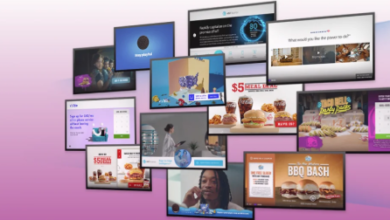
The creator economy in 2026 is moving at a blistering speed. With millions of hours of video, thousands of blog posts, and countless social media graphics uploaded every single minute, the battle for user attention has never been more fierce. For digital creators, influencers, and brand strategists, relying on slow, traditional content production pipelines is no longer viable. If it takes you days to design a single set of social media graphics or product banners, your brand will quickly get drowned out by faster competitors.
Artificial intelligence has completely rewritten the playbook for digital audience engagement. In 2026, a successful visual content strategy isn’t about using AI as a cheap shortcut; it’s about treating generative tools as a high-speed creative partner. By mastering automated workflows, creators can achieve unprecedented production volume while drastically elevating the visual quality of their personal and commercial brands.
Moving From Random Posting to an AI-Driven Content Factory
In previous years, many creators used AI tools simply to generate random, flashy images without a clear goal. Today, successful digital cross-platform branding requires a structured, multi-tier system. You need to produce high-performing thumbnails for YouTube, eye-catching carousels for Instagram, vertical layouts for TikTok ads, and professional graphics for your website.
Fulfilling this demand manually is an administrative nightmare. AI changes this completely by turning a single creative idea into an infinite stream of multi-platform assets. If you want to optimize your production pipeline, mastering modern content creation workflows allows you to turn simple text concepts into high-quality social media content right from your browser. This fluid framework slashes your production time from hours to seconds, leaving you with more energy to focus on big-picture community building and narrative scripting.
[ Master Creative Prompt ] ➔ [ Multi-Platform AI Scaling ] ➔ [ Local Canvas Branding Retouch ] ➔ [ Automated Multi-Channel Drop ]
Maximizing Monetization Through High-Impact Marketing Visuals
For the modern digital creator, audience growth is only half of the equation; the real challenge is monetization. Whether you are launching an indie merchandise line, promoting a digital course, dropshipping niche products, or running sponsored brand campaigns, the quality of your commercial graphics directly dictates your conversion rates.
Consumers in 2026 expect studio-grade lifestyle photography, even from independent creators. You no longer need a massive budget or a physical studio to build professional-grade retail campaigns. Integrating advanced marketing visuals pipelines into your business model enables you to instantly place any product—whether it’s a physical hoodie, a custom supplement bottle, or an e-book mockup—into premium, highly realistic contextual environments. This hyper-flexible approach allows indie creators to match the production value of global multi-national corporations on a shoestring budget.
Core Pillars of a Winning 2026 Visual Strategy
To build a bulletproof visual presence this year, digital creators must structure their content engines around three core pillars:
1. Cross-Platform Asset Continuity
A major mistake creators make is changing their look entirely between platforms. Your visual identity—your specific color palette, lightning profile, and atmospheric texture—must remain consistent whether a fan sees your thumbnail on YouTube or an ad on Instagram. AI allows you to save custom style seeds and reference patterns, ensuring all generated assets feel unified under your personal brand DNA.
See also: Polarized Sunglasses Guide: UV Protection Meets Fashionable Design
2. High-Frequency A/B Thumbnail Testing
Click-through rate (CTR) is the ultimate metric for algorithmic growth. Top creators do not just design one thumbnail and hope for the best; they use AI canvas tools to rapidly swap expressions, modify backgrounds, and alter color schemes to generate five distinct variants. They can then test these variants in real time to see which combination captures the most clicks.
3. Hyper-Localized Visual Adjustments
The global audience is highly fragmented. What works for a viewer in New York might not resonate with a viewer in Tokyo or London. AI allows creators to easily alter background elements, cultural motifs, and contextual props within an image locally to match the exact demographic preferences of different target markets, maximizing global relatability.
Traditional Content Creation vs. The 2026 AI-Driven Strategy
| Content Factor | Old Manual Workflow | Modern AI-Driven Strategy |
| Ideation & Prototyping | Hours spent browsing stock sites or sketching blueprints. | Instant visual generation based on raw textual concepts. |
| Asset Multi-Formatting | Redesigning layouts manually for every single platform aspect. | Procedural outpainting and smart layout scaling in seconds. |
| Commercial Product Staging | Hiring photographers and buying staging props manually. | Infinite AI-driven lifestyle background and shadow generation. |
| Graphic Production Scale | Limited strictly by physical energy and manual design speed. | Infinite scaling with automated batch processing options. |
The Master Content Strategy Prompt Matrix
To generate elite, attention-grabbing visuals that easily cut through busy algorithmic feeds, your text prompts must combine high-end photographic techniques with clear emotional and branding directions.
The Creator’s High-Converting Prompt Formula:
[Subject Core Focus] + [Platform Specific Composition] + [Lighting & Color Accents] + [Atmospheric Grain/Texture] + [Brand Vibe/Mood]
High-Converting Strategy Prompt Example:
- “A vibrant, hyper-engaging tech YouTube thumbnail concept featuring an enthusiastic creator unboxing a futuristic neon gadget. Cinematic close-up framing, high-contrast rim lighting with a bold teal and purple color scheme, subtle dynamic background blur, ultra-clean commercial aesthetic.”
Future Outlook: The Rise of Autonomous Creator Avatars
As we head deeper into 2026, the boundaries of content generation continue to expand. We are transitioning away from basic static image editing and moving toward fully interactive, automated asset management. In the near future, AI content engines will automatically analyze your social media analytics, detect which visual trends are going viral in real time, and autonomously generate matching graphic variations tailored to your specific audience profile. Creators who build a solid foundation with these generative workflows today will be perfectly positioned to run the highly automated media empires of tomorrow.
Frequently Asked Questions (FAQs)
Will using AI-generated graphics cause my social media accounts to get shadowbanned?
Absolutely not. Major algorithms like YouTube, Instagram, and TikTok prioritize user engagement metrics—such as watch time, click-through rates, and retention signals—rather than the specific tools used to build the visual assets. High-quality, engaging AI graphics actually improve these signals by making your content more visually appealing.
How do I add my own face or personal brand products into an AI image generator?
The most effective method is using an Image-to-Image (Img2Img) or specialized “ControlNet” workflow. You upload a clear, well-lit base picture of yourself or your product to the AI system, lock it as a reference asset, and then write text prompts to change the background, lighting, and environment around it while keeping the main subject completely accurate.
Do I need a high-end graphic design computer to execute an AI content strategy?
Not anymore. Most top-tier generative platforms in 2026 run completely via cloud-based processing. This means all the heavy computational rendering is handled on powerful external servers, allowing you to generate flawless 4K images and marketing assets directly from a standard laptop, tablet, or smartphone.
How can I make text stand out cleanly on top of an AI-generated background?
When writing your prompt, explicitly include phrases like “clean negative space,” “minimalist composition,” or “soft background gradient.” This instructs the AI to leave a clean, less cluttered area in the image, giving you the perfect canvas to overlay bold typography, video titles, or call-to-action buttons later.