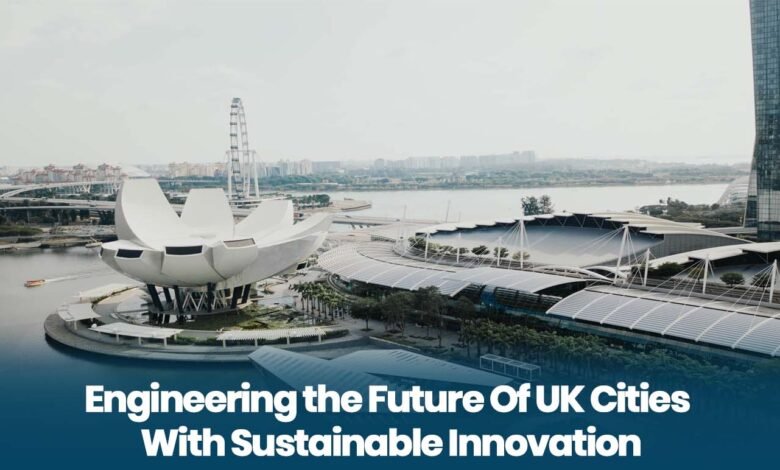
Cities are living organisms; they breathe, grow, and evolve with time. Like the natural world, they are always changing and continuously adapting to their environment as the need arises. The issues of fast-growing populations, outdated systems, and rising environmental pressures across the country call for innovative approaches that have little to do with simple urban expansion.
The urban engineering and architecture community is developing innovative strategies to re-imagine the city of the future. By emphasizing sustainable design and energy efficiency, their aim is to ensure that cities not only survive but thrive in the coming years. In this context, students exploring urban engineering often turn to assignment help resources to better understand the complexities of sustainable innovation.
The development of UK cities is not just about solving problems; it is about creating a brighter future through eco-friendly technologies. Every investment made in sustainable innovations helps bring us closer to this goal.
Transforming Urban Cities and Reshaping The Future Of The UK
Many specialists agree that the era when engineers thought about expanding existing cities is coming to an end. At the moment, the goal of most urban architects and engineers is quite different, and instead of simply making cities larger, they want to transform them to make urban living more comfortable, energy-efficient, and less harmful to the environment.
Thus, urban infrastructure requires drastic changes to make it work more efficiently and meet all challenges associated with climate change and other phenomena. Sustainable engineering offers a solution to this problem as contemporary projects focus on making the infrastructure environmentally friendly, resilient, and energy-efficient.
To this end, sustainable constructions utilize advanced building materials like low-carbon concrete. Engineers use recycled products as well as environmentally friendly materials that increase the service life of all constructions.
Additionally, sustainable infrastructure should also incorporate certain elements allowing cities to withstand climate-related disasters. For instance, flood-resistant roads, intelligent drainage systems, and green spaces are necessary for adaptation.
With all these aspects taken into account, sustainable infrastructure seems to offer strong guarantees of longevity to the urban environment, thus ensuring the future of the UK.
Smart Technologies And The Future Of The UK
It is hard to walk down the streets of contemporary cities without noticing numerous smart sensors monitoring urban processes. Traffic lights and other technological innovations can hardly be overlooked by those familiar with their functioning.
As technology evolves, more and more cities across the UK start incorporating smart devices into their urban infrastructure, thus becoming smart cities themselves. All these innovations promise a brighter future for the UK for several reasons.
First, they make urban areas more energy-efficient, allowing for better resource allocation as a result. Some examples include:
- Smart traffic management system;
- Intelligent street lights that reduce energy expenses;
- Waste management software;
- Air quality sensors.
In addition, such smart urban systems allow for making timely decisions and planning urban development based on available data. Moreover, the implementation of artificial intelligence and the Internet of Things will only expand the role of urban technologies in the future. Balancing part-time work and studies makes professional dissertation help a valuable resource for many postgraduates.
Green Energy Solutions And The Future Of The UK
As it is clear from the title, green energy is one of the crucial aspects related to sustainable urban development. Indeed, conventional energy resources have long been used in the country; however, their usage is associated with carbon emission rates. Consequently, achieving the target of reaching net-zero becomes impossible.
Fortunately, the issue is already being solved with the help of innovative engineering projects aimed at increasing the proportion of renewable energy produced and used in urban settlements across the country.
This is why such sources as solar energy, wind farms, hydrogen facilities, and battery storage systems are becoming indispensable for cities. When deadlines loom, the search to write my assignment quickly becomes a top priority for stressed students.
Among the innovations introduced by engineers, there are, for example:
- Solar roofs.
- Electric vehicle stations.
- Community energy generation projects.
- Heating and cooling projects.
It is important to emphasize that all these innovations would not be possible without engineering expertise. Thus, engineers play an important role in the creation of the future of the UK.
Circular Economy Initiatives And The Future Of The UK
In recent years, the old way of using resources and producing waste has been replaced by more advanced approaches. The circular economy encourages engineers to preserve resources, reuse materials, and minimize the generation of waste.
Today, in British cities, this philosophy leads to such results as:
- Recycling construction materials to build new structures.
- Producing energy from waste materials.
- Establishing water recycling systems that reduce water consumption in cities.
- Designing structures that are easier to reuse.
The described initiatives will have a positive effect on preserving natural resources and reducing carbon emissions. Moreover, they help create urban systems that will be sustainable for the future.
In such a way, innovations related to the circular economy will significantly contribute to shaping the future of the UK.
Building Climate Resilient Cities And The Future Of The UK
Climate change is one of the major concerns of our time. They lead to increased precipitation and heat, causing severe weather anomalies.
With the help of urban engineering solutions, it is possible to develop systems that help withstand such challenges better. For example, rather than dealing with the issues, specialists try to make cities resilient to them.
Some examples include:
- Establishing flood defenses in vulnerable areas.
- Planting urban forests to minimize the heat island effect.
- Implementing sustainable drainage systems in urban areas.
- Building coastal protection systems.
Thus, resilient cities suffer less during disasters and restore their functionality more quickly.
Developing climate-resilient cities is a good step towards shaping the future of the UK in the right way.
Digital Innovation Driving Sustainable Construction in the UK
Urban construction innovation has moved past bricks and mortar; it has become data-driven and automated through intelligence. The technological revolution in digital construction is changing the game in how cities are built, eliminating traditional manual processes and incorporating modern, computerized solutions to improve construction efficiency and accuracy.
Some of the key technological developments that will shape the future of smart cities include BIM technologies, digital twin technologies for city infrastructure, artificial intelligence for construction design, drone inspection systems, and automated construction systems. Through this, it becomes possible to foresee problems in the planning stage and ensure efficient resource utilization.
For learners and professionals navigating these complex advancements, resources like Engineering assignment help provide valuable support in mastering technical concepts and applying them to real‑world projects. As digital construction continues to evolve, it strengthens the UK’s ability to create resilient, future‑ready cities that balance innovation with sustainability.
See also: 7 Tips for Advanced Strategies for Modern Ad Tech Growth
Water Management And The Future Of The UK
Water is an indispensable part of any urban project. In the UK, it has become a matter of great concern because of changing weather patterns.
To manage this issue in the best possible way, cities implement various solutions that reduce the risk of droughts or excessive rain.
For instance, nowadays, a lot of urban projects include:
- Installing systems of rainwater collection.
- Optimizing water distribution with the help of smart technologies.
- Developing a system of leak detection.
- Setting up a sustainable urban drainage system.
- Designing buildings with water-efficient systems.
By doing so, British cities will be able to avoid problems related to water shortage and flooding.
Water management will remain a crucial factor in the future of the UK cities.
Creating Sustainable Public Spaces And The Future Of The UK
Although cities consist of various buildings, they also contain spaces that are vital for people. Parks, squares, green corridors, and other types of green spaces make cities greener and healthier.
Modern urban engineers understand that it is important to create urban areas where people can enjoy natural amenities as well as get some health benefits.
Some advantages include:
- Improving the air quality in cities.
- Decreasing temperatures.
- Creating better habitat for biodiversity.
- Improving the efficiency of stormwater management systems.
- Increasing possibilities of recreation.
In such a way, green urban infrastructure projects will benefit the population, which makes them essential in the context of shaping the future of the UK.
Artificial Intelligence And The Future Of The UK
One of the most powerful tools that modern urban specialists have at the moment is Artificial Intelligence. With the help of AI, it is possible to analyze huge quantities of data and obtain conclusions based on such processing.
As a result, cities start operating more efficiently and respond better to emerging problems.
Here are some examples of the application of AI in urban infrastructure:
- Predictive maintenance of infrastructure.
- Traffic optimization systems.
- Energy consumption prediction.
- Planning of services.
- Environmental monitoring.
As Artificial Intelligence evolves, its importance for urban management increases steadily. Used responsibly, it can significantly accelerate innovations in the sphere. Thus, this tool will influence the future of the UK cities positively.
Final Thoughts
Innovations don’t only benefit the environment. On the contrary, they open great opportunities for economic growth as well.
When investing in innovations, including sustainable engineering technologies, cities start to develop. Such investments result in job creation and improved welfare.
For example, when implementing sustainable innovations, cities attract:
- Professional specialists.
- Research institutions.
- High-tech companies.
- International investors.
- Entrepreneurs.
It is a kind of cycle in which innovations stimulate development, and development fosters innovations. The decisions we make today will profoundly impact the future of the UK. Thanks to the rapid technological growth, sustainable engineering development will give the UK cities a competitive edge in the global market.